
Following a campaign of pressure from community energy groups, the Scottish Government is making it easier for communities to own windfarms, hydroelectric schemes and solar PV arrays on public land.
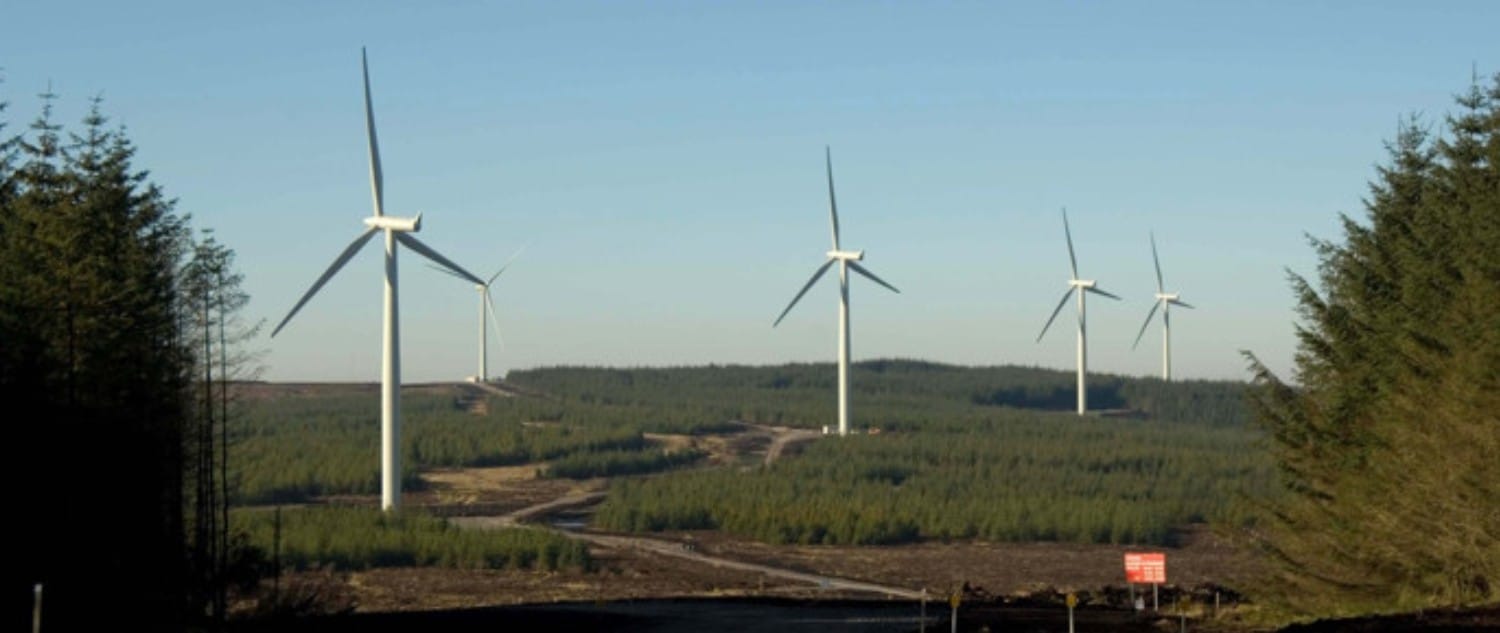
This breakthrough comes after community groups on the Cowal peninsula attempted to take over operation of the Cruach Mhor windfarm, but their bid was rejected in favour of a new private developer. The Cowal community have fought to highlight their case, and the wider case for community energy since this disappointing outcome.
This was seen as a test case for Scottish Government to turn its ambitions on community empowerment into action so community energy groups felt let down by the outcome. The changes set out today will give communities a better chance in the future.
In the coming decades, many existing windfarms in Scotland will need ‘repowered’ (replaced with newer technology). At this point a new operator could come in, by bidding for a new lease to repower and operate the windfarm for two decades or more. Community energy organisations say this is an opportunity to transfer some privately-owned windfarms into community hands.
On average, community-owned windfarms generate 34 times more income for the local community than privately-owned windfarms, per Megawatt. Owning renewables is seen as a good way to keep wealth circulating locally and provide a reliable income stream for community organisations and projects.
The Scottish Government announced a suite of changes to support communities to develop or repower renewables under 50MW on public land, including:
- A 15 month period for communities to apply for the renewables lease, before private companies can bid;
- Scottish Government funding available to support communities’ applications;
- A register of public land used for renewables, with dates when new leases will become available.
Josh Doble from Scottish Community Coalition on Energy said:
“This is the biggest step forward in community energy policy in almost twenty years. The Scottish Government is to be congratulated for giving communities first refusal on owning renewable energy projects on Forestry Commission land. If this pilot is rolled out swiftly and effectively it will deliver huge community wealth building potential around Scotland and help meet Scottish Government’s own target for 2GW of local and community-owned energy by 2030.
“Huge credit is due to Cowal Community Energy who have fought so hard to highlight the issues that saw their ambitious plans for a community energy project turned down. This is a win for communities and the public sector. But there is still work to do to ensure that all energy projects on public land, not just those below 50MW, are part of this streamlined community right of refusal.
“Our thanks to Ariane Burgess MSP for championing this cause in the Scottish Parliament, and to the Scottish Government for listening to the Cowal community and Scottish Community Coalition on Energy. We look forward to seeing this pilot mainstreamed as quickly as possible so communities around Scotland can start reaping the benefits of owning a stake in the renewables boom.”
Graeme Murray from Cowal Community Energy said: “While this is very welcome news for the wider community energy sector, it is a painful irony that Cowal will be the only community not to be able to benefit from this change which we have instigated. In addition, I can see no rationale whatsoever for the 50MW cap. If a community can demonstrate capacity to develop a 50MW windfarm then they will be equally capable of developing anything greater than 50MW.”


