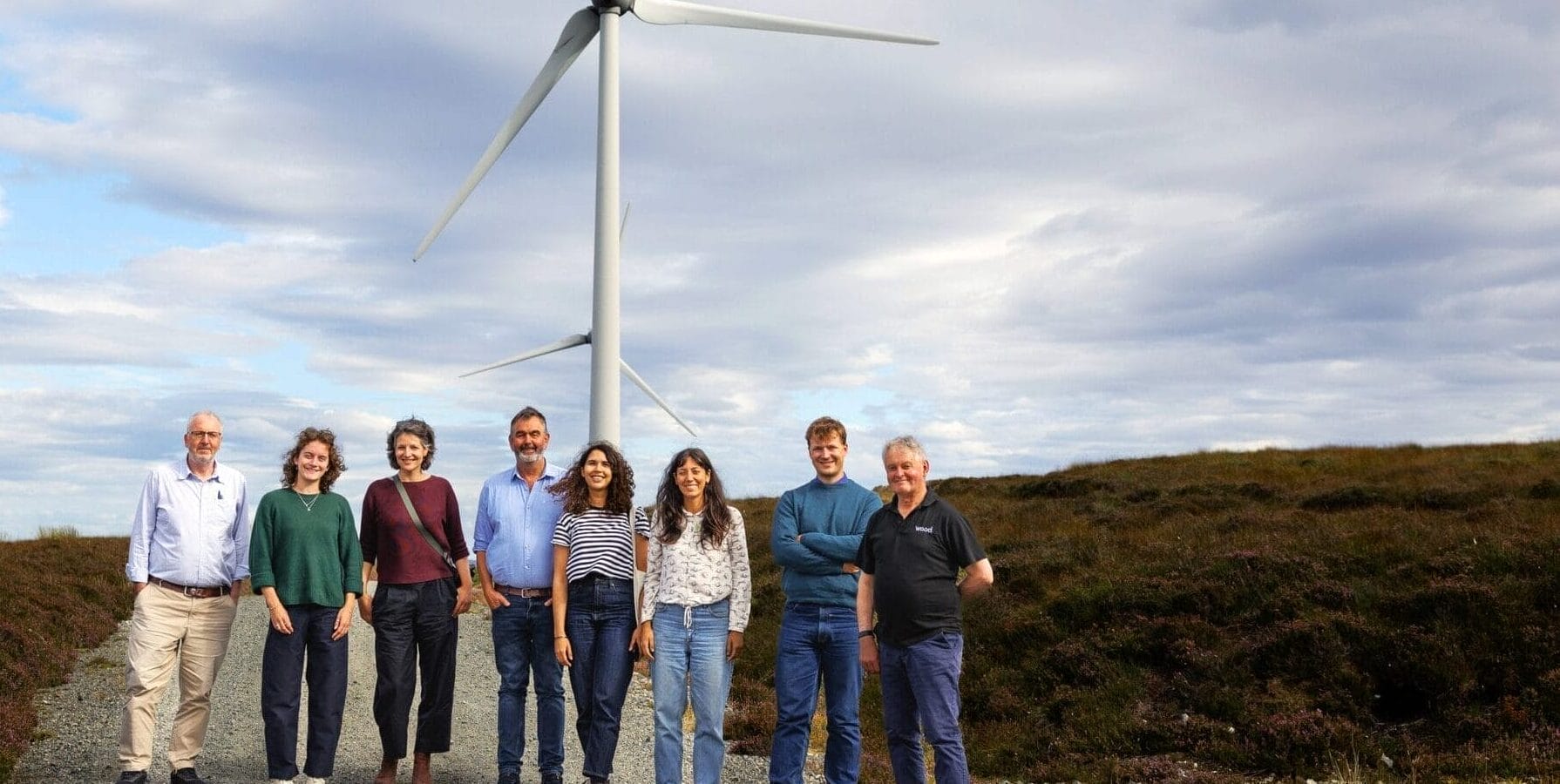
On August 27th and 28th, RESP Scotland representatives from the National Energy System Operator (NESO), visited Stornoway to gather insights from a wide range of local stakeholders—including community energy generators, local authorities, and grid operators—as part of their strategic planning process for Scotland’s energy future.
RESP Scotland is part of the GB-wide Regional Energy Strategic Planning (RESP) team, at the National Energy System Operator (NESO). Established in early 2025, NESO’s RESP role aims to ensure Scotland, Wales and England receive the energy infrastructure needed to meet their net zero and growth ambitions through a whole-system approach that integrates electricity, gas, and hydrogen.
The visit to Stornoway was part of NESO’s ongoing stakeholder engagement programme, designed to collect bottom-up evidence to inform strategies for 2030 and beyond 2050. While the agenda included meetings with Comhairle nan Eilean Siar (CnES), SSEN, SGN and other regional actors, a significant portion of the visit was dedicated to understanding the unique role of Community Energy in the Western Isles.
On August 27th, NESO visited Point and Sandwick Trust (PST) to explore the impact of community-owned generation on local wellbeing and economic resilience. PST showcased its contribution to local wealth creation and presented its new 25MW battery project, currently under Gate 2 assessment for grid connection. The visit concluded with a tour of the Beinn Ghrideag 9MW wind farm, one of the largest community-owned projects in the United Kingdom.
Calum MacDonald, Development Director at Point and Sandwick Trust commented:
“Over the past 10 years, our 9MW wind farm has returned more community benefit funds into the local area than any other wind farm in the UK, including corporate schemes fifty times bigger in size. We believe that our example shows the economic and social importance of increasing the number and scale of community energy projects so that local economies across Scotland can benefit fully. We were very pleased at the level of interest in the issues shown by the NESO team during their visit to Lewis and look forward to further engagement in the future.”
The following morning, NESO met with Galson Estate Trust to discuss the role of community landowners in energy generation. Highlights included the West Coast Community Energy Project (43MW),currently under Gate 2 assessment for grid connection, and the Knock and Swordale Community Company (6MW)—both of which were initially offered firm grid connections but have since been transferred to the Active Network Management (ANM) scheme. These discussions underscored the challenges of securing grid access for new and repowered community projects. For more information, please read the Fios news article.
Neil Mackinnon, Development Manager at Galson Estate Trust, expressed:
“Grid connections are typically the single most challenging aspect of any community energy project. Co-ordination with the RESP team from NESO is an important part of achieving future grid capacity, and we welcome the move towards a joined-up whole-system approach”
Angus Macdonald from the Knock and Swordale Community Company said:
“It was a significant step forward for us to have representatives from RESP in Lewis to see both the hugely positive benefits of existing community-owned energy schemes and the seemingly intractable obstacles being placed in the way of potential new schemes, both by private multinational developers and grid operators, and the regulatory system. It would be good to see a similar level of interest from both the Scottish and UK Governments and to have their representatives visit the Islands immediately. This would help them to understand the transformative potential of community renewables and to institute urgent changes to a regulatory system that is biased against small communities attempting to transform themselves through the benefits they could gain from community-owned renewables. It might also persuade them of the need to take on the might of the private operators to make room for community developers.”
The community meetings concluded with a roundtable hosted by Community Power Outer Hebrides (CPOH) at the UHI North West Hebrides campus, where members outlined key barriers to community generation and advocated for reforms to the grid connection process. Requests included ring-fencing for community projects, formal designation of community energy within regulatory frameworks, and smarter decentralised grid operations to enable local energy markets and improve island resilience.
Zoë Holliday, CEO at Community Energy Scotland, commented:
“Our team was delighted to welcome the RESP Scotland team to the Outer Hebrides and introduce them to several of our members. We welcome NESO’s continued commitment to engaging with community energy groups across Scotland to better understand the unique challenges they face. We look forward to supporting further visits and conversations to help ensure that the RESP reflects the specific needs of our sector.”
NESO’s RESP Scotland team expressed strong interest in continuing engagement with CPOH and committed to sharing insights with other NESO departments and stakeholders. The NESO team listened to the concerns regarding connections and talked at a high-level about the connection reform process and agreed to take back the groups thoughts to the connection reform team.
Julian Leslie, Director for Strategic Energy Planning and Chief Engineer at NESO, stated:
“This has been a great opportunity for NESO to meet with Community-owned Energy groups from across the Western Isles. We look forward to continuing this collaboration as we develop Regional Energy Strategic Plans to meet future local energy needs and to support wider strategic energy planning”.


